


"Left feeling like a new person! The massage was incredible, all my tension has gone. The reflexology was particularly great, will definitely recommend to others"
— Emma
2nd October 2023
Three Overlooked Probiotic Products that Can Make all the Difference

In a nutshell
- Take note of the probiotic strains included – compare these with other products you may have already taken.
- Take note of the Colony Forming units (CFU) - Quantity of viable live cultures.
- Opt for professional brands with scientifically validated guarantees of content quantity and viability.
- Take advantage of the professional advice lines available for personal, specific advice.
I don't know about you but I've rarely felt the improvements I’d hoped for by taking probiotics. I truly believe the hype - it all makes perfect sense - but even taking top-notch, ‘scientifically verified’ products long term never quite seemed to return my good investment. Especially my hope for improved health.
Over time, however, I’ve learnt to be more discerning about several important factors which can make the difference between an effective result or none at all:
- Diversity of probiotic species needed
- Specificity of strains used
- Colony Forming units (CFU) - Quantity of viable live cultures
Is Patenting Potential Part of the Problem?
Unlike most natural products such as supplements, probiotics may now be patented under certain criteria [1, 2, 3]. It hase been argued that this extra commercial potential is driving the sheer volume of research into the wonderful world within, with seemingly glowing reports at every turn - not so much for consumer benefit as for profit [4]. Every brand is keen to endorse its products with impressive-sounding data points which may not be as directly applicable in practice as they may first appear.
In much the same manner in which antibiotics were once deemed a one-hit-wonder solution to multiple ailments, probiotics are often presented as an equally well-directed, ‘simple’ solution to off-set any imbalance of the complex, ever-changing ecosystem that is the microbiome.
‘However, it must be clear that probiotic properties are strain-related and even tissue-dependent. Thus, the probiotic effect [is] neither universal to all bacterial species nor to all human tissues.’ [5]
Whilst I now realise my previous approach to taking probiotics was a hit-and-miss assumption that whatever first class product I consumed would automatically correct any imbalance present, the positive spin-off of my persevering trial-and-error method is that it’s led me to discover three less commonly understood probiotic formulations which deserve mention and I hope targets positive results for others.
1. Optibac One Week Flat
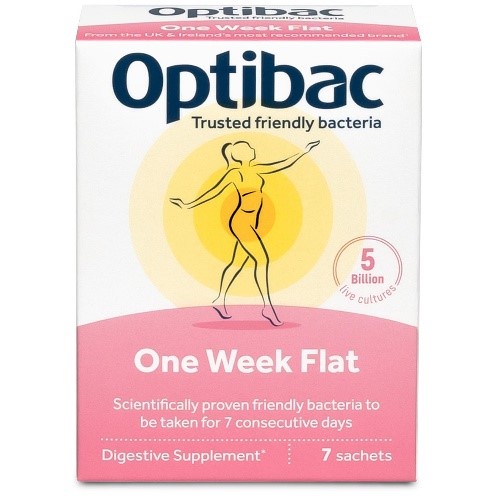
Top of the list: it does what it says on the tin. One week of adding this to my morning latte really did reduce bloating and discomfort leading to a flatter tummy, comfortable in clothes once more.
I discovered this by chance after one of my university tutors had mentioned Optibac as her probiotic brand of choice in a lecture. Whilst it's not as much the brand but rather the individual strains contained within each product which makes all the difference, Optibac are one of the few brands differentiating their products in line with this understanding. I noted their extensive product range so tried the most applicable. The result: a positive outcome within the week.
After such a great response, I analysed the packaging to find what was different about One Week Flat compared to others I’d tried. I noticed: Lactobacillus casei Rosell-215; Lactococcus lactis Rosell-1058 and Lactobacillus acidophilus/helveticus Rosell-52 - specific species and strains which weren’t in other products I’d tried.
It is also a synbiotic formulation which means it’s a combination of both pre-and probiotic strains.
Although this is starting to change, most generic probiotic advice seems to simply recommend ensuring products include Lactobaccillus and Bifidobacterium. However, this identifies just two most abundant and commonly researched genera; few sources provide specific guidance on which species - or sub-strains - may be appropriate, such as Lactobaccillus rhamnosus, L. plantarum, L. casei etc [6, 7,8].
Perhaps this is why generalised, non-specific formulations never brought significant (or perhaps, clearly identifiable) gains whilst the One Week Flat did. Yet it's significant gains I think we're all after!
Whilst I've received similar good reports about One Week Flat from friends and family there's one other direct case which I find promising in practice. Whilst in student clinic I treated a male patient who came primarily for IBS lasting 3 years. People often come for acupuncture after having exhausted all conventional routes. At the first consultation I recommended One Week Flat but when he came for his follow-up treatment two weeks later his IBS symptoms were no longer a primary concern. Of course, this could be due to my phenomenal one-session wonder acupuncture treatment despite being a student...though I have a sneaking suspicion he was Optibac-ed to health instead…
Of course, these isolated accounts carry with them no scientific weighting. Equally, countless statistically significant studies are of no use unless those interventions studied may be practically applied to alleviate real-life issues. This is my aim here, whilst offering further resources.
With so many people looking to probiotics precisely for gut-related issues this really is a product worth trying, with several targeted strains most likely missing in other ‘scientifically-proven-to enhance-the-gut’ formulations you may have tried.
If, like me, you've been unimpressed by your probiotic investments so far, then don't rule out this avenue until you've tried One Week Flat [link to discount page] – but do read my third point below.
2. Saccharomyces boulardii
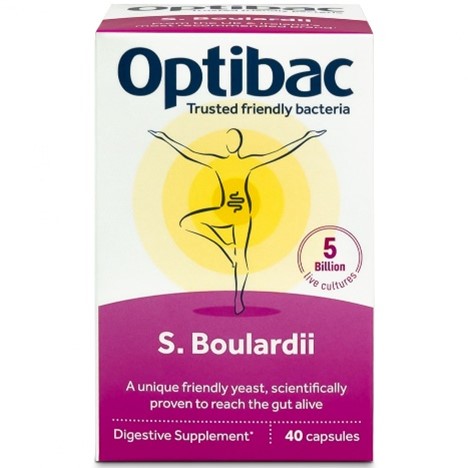
No-one quite knows what this is or does so leaves it on the shelf. I only learned about the unique actions of this promising probiotic from direct discussion with a nutritionist.
I’d really recommend taking advantage the Optibac advice line service which puts you through to one of their nutritional advisors who have experience applying this specialised knowledge with first-hand practical application. In one conversation I learned several of the points I am sharing here.
What I learned was that Saccharomyces boulardii (S.boulardii) is different from most probiotics in that it is actually a yeast, rather than bacteria. It also does not colonise in the gut - unlike most probiotics. Instead, it was described to me as acting more like a detox agent which passes through the gut collecting pathogenic bacteria and yeasts which attach to it as it travels through, rather like Velcro, thus eliminating them safely from the body.
It is for this reason it is commonly used for food poisoning and as a protective aid when travelling abroad. However, I’ve received direct reports of more varied successful use. Not only has it stopped food poisoning (diarrhoea & vomiting) within the day (taking 2 capsules 3x daily); offered relief from general abdominal discomfort, candida albicans- and IBS-type symptoms but in one challenging case it even resolved mid-cycle vaginal bleeding. Again, these are only individual, personal reports but indicate some possible use in practice.
S. boulardii therefore seems to have a range of possible applications and is definitely one to consider at the start of a detox program or when a rogue pathogenic invasion or overgrowth may be suspected. It is now a store cupboard staple in our home and an essential first aid kit and travel bag companion. It is available at The Natural Dispensary with an ongoing 20% discount here: www.naturaldispensary.co.uk
3. Optibac Every Day EXTRA
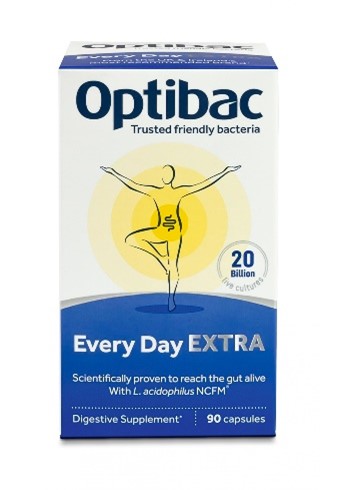
Sometimes more is needed. Whilst it’s true that often less-is-more, particularly if the most appropriate strains are utilised, the importance of sheer quantity of viable live cultures, known as Colony Forming units (CFU), became clear to me when treating a patient on prophylactic antibiotics for bladder infections.
It is not just a case of replenishing the bacteria lost from antibiotic use but of preventing the takeover of opportunistic species which may then become pathogenic in nature, if not kept in check by a more balanced internal ecosystem.
“Antibiotic-associated diarrhoea (AAD) is one of the most common side effects of antibiotics… A meta-analysis of 23 studies from the highly esteemed Cochrane Collaboration carried out in 2012 (focusing on contrasting and combining results from multiple studies) found that probiotics can reduce the risk of antibiotic-associated side effects by 64%.” [9]
Some antibiotic side effects may be diminished by taking a high-dose probiotic two hours away from each other. This may also aid completion of a one-off course of antibiotics; an important factor to help prevent antibiotic resistance. Whether side effects are experienced or not, the microbiome is now realised as being part of a memory-holding and communication network, therefore restoring it to optimum function may be seen as a primary objective after dysregulation [10,11]. James Kinross, consultant colorectal surgeon at Imperial College London, explains:
"Some people are very susceptible to damage in [their] microbiome from antibiotics, and their ecology of their microbiome will change dramatically and never return to what it was before the antibiotic dose.

We're losing diversity in our guts and crucial microbes that have sustained us for hundreds of thousands of years [are being lost] on an unprecedented time scale."[10]
Previously, claims of ‘2 Billion live cultures!’ sounded impressive and I would have certainly felt I was resolving core issues with such doses. However, if you have been on even just one course of antibiotics then much higher doses of 20 billion, or even 50 billion plus, may be needed to replenish a disrupted microbiome, over a longer period of time. [12]
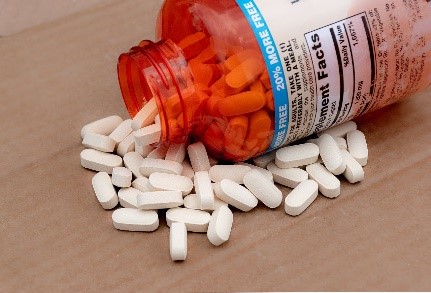
Unfortunately, another factor to be aware of is the discrepancy between product labelling and actual content. Several studies have raised awareness of the lack of quality controls on probiotic supplements being used for medical interventions [13, 14, 15]. The results of one such study demonstrates this succinctly:
‘RESULTS None of the 10 products tested matched their labeled microbiologic specifications. Two brands grew nothing aerobically or anaerobically. No Lactobacillus grew in five brands, although their labels stated that this was the main species. Eight brands contained viable cells, but only 10% of the number stated by their manufacturers.’ [13]
No matter how attractively priced a product is, it is worth opting for professional brands with strong, scientifically validated guarantees of content quantity and viability.
Taking note of previous product specifications you have tried and using the free advice lines available at Optibac or Invivo should help guide your needs and target your probiotic product choices to be the most applicable and therefore effective.
All these products are available using an ongoing 20% discount at Natural Dispensary. Click here to apply: (link my page info).
References
[1] Fleishman, C. (2018). Focus on Probiotic Patents: USA. INTERNATIONAL PROBIOTICS ASSOCIATION. Available from https://internationalprobiotics.org/focus-on-probiotic-patents-usa/ [Accessed 28 September 2023].
[2] Thambisetty, S. (2007). Patents as Credence Goods. Oxford Journal of Legal Studies, 27 (4),707–740. Available from https://www.lse.ac.uk/law/people/academic-staff/sivaramjani-thambisetty/Documents/thambisetty3.pdf [Accessed 28 September 2023].
[3] Chavda, V. P., Meyyappan, A., Chavda, D., Soniwala, M. (2020). A Glance to the Patent World of Probiotics. Probiotic Research in Therapeutics. Singapore: Springer pp329-365. Available from https://link.springer.com/chapter/10.1007/978-981-15-8214-1_15#chapter-info [Accessed 30 September 2023].
[4] Fabbri, A., Lai, A., Grundy, Q., Bero, L.A. (2018). The Influence of Industry Sponsorship on the Research Agenda: A Scoping Review. Am J Public Health. 108 (11), e9-e16. Available from https://www.ncbi.nlm.nih.gov/pmc/articles/PMC6187765/ [Accessed 30 September 2023].
[5] Stavropoulou, E., Bezirtzoglou, E. (2020). Probiotics in Medicine: A Long Debate. Frontiers in Immunology.11, 2192.Available from https://www.ncbi.nlm.nih.gov/pmc/articles/PMC7544950/#:~:text=Probiotic%20microorganisms%20are%20part%20of,nor%20to%20all%20human%20tissues. [Accessed 30 September 2023].
[6] Ciorba, M. A. (2012). A gastroenterologist's guide to probiotics. Clin Gastroenterol Hepatol.10(9), 960-8. Available from https://www.ncbi.nlm.nih.gov/pmc/articles/PMC3424311/#:~:text=Lactobacillus%20and%20bifidobacterium%20species%20are%20the%20most%20commonly%20used%20probiotics. [Accessed 30 September 2023].
[7] Holford, P. (2021). Does Your Gut Contain the Secret to Good Health? PatrickHolford.com. Available from https://www.patrickholford.com/advice/does-your-gut-contain-the-secret-to-good-health/ [Accessed 30 September 2023].
[8] National Institutes of Health (NIH) Office of Dietary Supplements (ODS). (2022). Probiotics. Fact Sheet for Health Professionals. NIH. ODS. Available from https://ods.od.nih.gov/factsheets/Probiotics-HealthProfessional/#h4 [Accessed 30 September 2023].
[9] Dwyer, A. (2023). Taking Probiotics With Antibiotics. Probiotics Learning Lab. Available from https://www.optibacprobiotics.com/uk/learning-lab/in-depth/general-health/probiotics-with-antibiotics#Why%20take%20a%20probiotic%20with%20an%20antibiotic [Accessed 30 September 2023]. Cochrane Review: Goldenberg, J.Z., Yap, C., Lytvyn, L., Lo, C.K., Beardsley, J. Mertz, D., Johnston, B.C. (2017). Probiotics for the prevention of Clostridium difficile-associated diarrhea in adults and children. Cochrane Database Syst Rev.12(12):CD006095. Available from https://www.ncbi.nlm.nih.gov/pmc/articles/PMC6486212/ [Accessed 30 September 2023].
[10] James Kinross, consultant colorectal surgeon at Imperial College London. (2023). (Cited in BBC. FUTURE. Do antibiotics really wipe out your gut bacteria? Bradley, J. (2023)) Available from https://www.bbc.com/future/article/20230825-do-antibiotics-really-wipe-out-your-gut-bacteria [Accessed 30 September 2023].
[11] McLean, P.G., Calver, A.R., Alpers, D.H., Collins, S.M., Shanahan, F., Lee, K. (2009). The Emerging Role of the Microbial-Gastrointestinal-Neural Axis. Gastroenterol. Insights, 1 (1), e3. Available from: https://www.pagepress.org/journals/index.php/gi/article/view/gi.2009.e3/1461 [Accessed 28 September 2023].
[12] Gao, X.W., Mubasher, M., Fang, C.Y., Reifer, C., Miller, L.E. (2010). Dose-response efficacy of a proprietary probiotic formula of Lactobacillus acidophilus CL1285 and Lactobacillus casei LBC80R for antibiotic-associated diarrhea and Clostridium difficile-associated diarrhea prophylaxis in adult patients. Am J Gastroenterol. 105(7),1636-41. Available from https://pubmed.ncbi.nlm.nih.gov/20145608/ [Accessed 28 September 2023].
[13] Huff, C. (2004). Caveat emptor. "Probiotics" might not be what they seem. Canadian Family Physician, 50 (4), 583-587. Available from: https://www.cfp.ca/content/50/4/583?ijkey=6f81ad888d756b4dc8a3a874189bfe63487a18c6&keytype2=tf_ipsecsha [Accessed 28 September 2023].
[14] Coeuret, V., Gueguen, M. and Vernoux, JP. (2004). Numbers and strains of lactobacilli in some probiotic products. International Journal of Food Microbiology vol. 97(2), pp.147-56. Available from https://www.researchgate.net/publication/8184781_Numbers_and_strains_of_Lactobacilli_in_some_probiotic_products [Accessed 28 September 2023].
[15] Hamilton-Miller, J.M., Shah, S. and Smith, C. T. (1996). "Probiotic" remedies are not what they seem. BMJ. 312(7022), 55–56. Available from: https://www.ncbi.nlm.nih.gov/pmc/articles/PMC2349711/ [Accessed 28 September 2023].